Log in

Home
PACE-PAX
  • ESPO
    • Missions
    • About ESPO
    • Video about ESPO
    • Services
    • Deployment Sites
    • Aircraft
    • Satellites
    • Links
  • ESPO Archive
    • Browse
    • Help
  • Flight Request
  • Mission Tools
    • ASP Mission Tool Suite
  • PACE-PAX Home
  • Links
    • GMAO Mission Support
    • ARC Met Support
    • LaRC Science Data for Atmospheric Composition
    • AERONET Aerosol Robotic Network
  • Mission Planning
    • PACE-PAX 2025 Science Team Meeting
    • Mission Calendar
  • Participants
  • Platforms
  • Instruments
  • News
  • Photos
    • Aircraft
    • Instrument
    • People
    • Data
    • Other
  • NASA PACE Blog

Breadcrumb

  1. Home
  2. Photos

Mission Gallery

Data

PACE-Icebergs.png
This image of icebergs circulating in the currents of the Southern portion of the Atlantic Ocean near the South Georgia Islands was acquired by the Ocean Color Instrument (OCI) aboard the PACE satellite on January 5, 2025. It features a large iceberg drifter named A-76B that used to be a part of Iceberg A-76, which was once the largest floating iceberg in the world. A-76B now covers an area of 216 square kilometers, approximately the size of Baltimore, Maryland. The large green-tinted swirls around the iceb
PACE SWOT JPL.png
This animation shows data taken by NASA’s PACE and the international SWOT satellites over a region of the North Atlantic Ocean. PACE captured phytoplankton data on Aug. 8, 2024; layered on top is SWOT sea level data taken on Aug. 7 and 8, 2024.
PACE US-European SWOT.png
Launched in February 2024, NASA’s PACE satellite detects and measures the distribution of phytoplankton communities in the ocean. It also provides data on the size, amount, and type of tiny particles called aerosols in Earth’s atmosphere, as well as the height, thickness, and opacity of clouds.
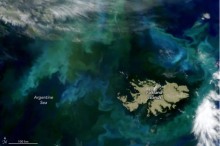
PACE-PAX Patagonias Oceans.png
NASA’s PACE satellite captured this dazzling phytoplankton bloom around the Falkland Islands on December 28, 2024, showcasing the dynamic shifts in marine life and their impact on the ocean’s biodiversity and the global carbon cycle.

NASA

National Aeronautics and
Space Administration

ESPO Main Menu

  • ESPO
    • Missions
    • About ESPO
    • Video about ESPO
    • Services
    • Deployment Sites
    • Aircraft
    • Satellites
    • Links
  • ESPO Archive
    • Browse
    • Help
  • Flight Request
  • Mission Tools
    • ASP Mission Tool Suite
  • Privacy Policy
  • FOIA
  • Contact
  • Accessibility

Page Last Updated: April 22, 2017

Page Editor: Brad Bulger

NASA Official: Marilyn Vasques

Website Issues: Contact Us