
News

SARP Students Meet with NASA Leadership at Ellington Field

Isaacman and SARP students at SARP 2026

Students participating in the 2026 Student Airborne Research Program (SARP) recently welcomed NASA Administrator Jared Isaacman, Deputy Administrator Matt Anderson, and Dr. Nicola Fox, Associate Administrator for NASA’s Science Mission Directorate, to the SARP deployment at Ellington Field in Houston, Texas.
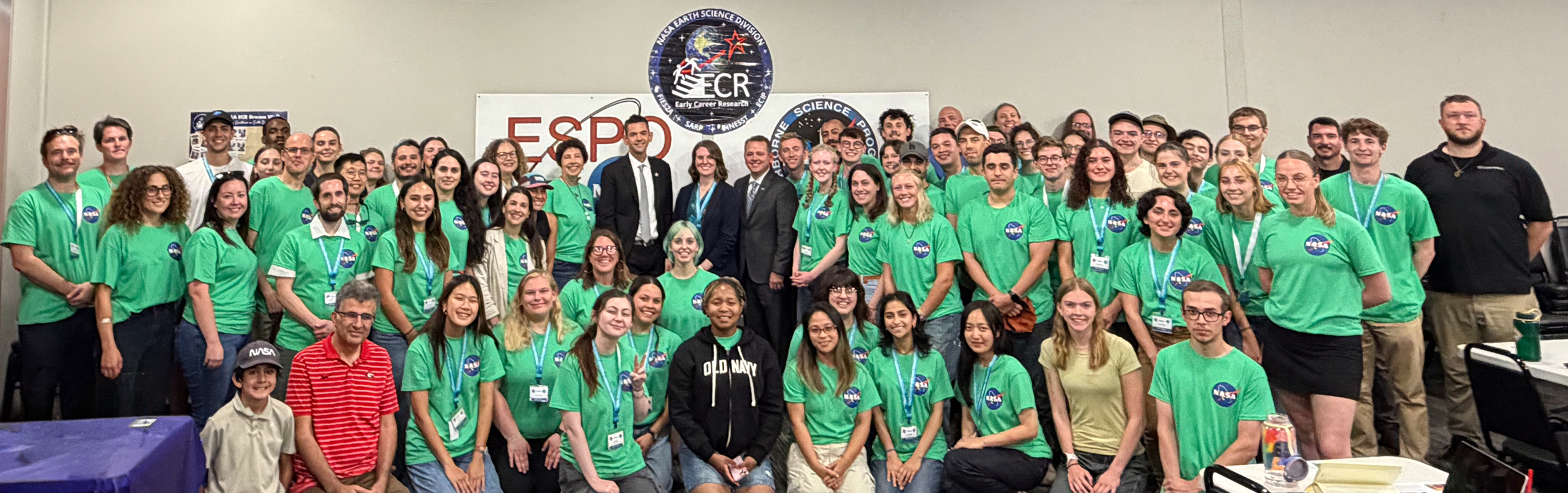
 

SARP Students and Administrator Isaacman at SARP 2026


During the visit, students had the opportunity to share their research projects, discuss their experiences participating in an airborne field campaign, and ask questions about careers in science, engineering, and NASA missions. The conversations provided a unique opportunity for students to engage directly with NASA leaders while gaining insight into the many paths that can lead to a career in STEM.

Students, mentors, and members of the aircraft and instrument teams also spent time with Dr. Fox discussing Earth science research and the collaborative efforts that make field campaigns like SARP possible.

The visit highlighted one of the program’s most valuable experiences: connecting the next generation of researchers with the scientists, engineers, and leaders working to advance NASA’s mission and our understanding of Earth.

NASA to Conduct Low-Altitude Flights Near Houston

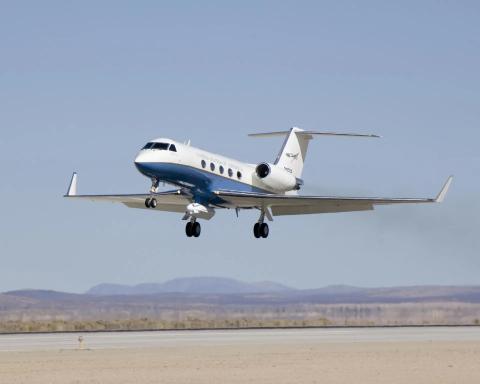
Five research aircraft will support a Student Airborne Research Program (SARP) mission out of Ellington Field in Houston. Flights are expected from Wednesday, June 3 to Saturday, June 13. During the mission, select maneuvers will be conducted at low altitudes over the Houston area. 

Pilots will fly remote sensing payloads in raster patterns, or parallel back-and-forth lines. The instruments flown could help researchers map the movement of the gases and particles that make up Earth’s atmosphere, changes to the lowest part of the atmosphere near the coastline, and the natural processes affecting the land and water in that area. The flights will primarily take place in the Houston area, with some extending over the Gulf of America. 

The operations will involve the agency’s Gulfstream V (N95NA), Gulfstream C-20A (N802NA), and Gulfstream III (N520NA), as well as NOAA’s WP-3D Orion (N43RF) and a King Air B200 aircraft (N46L) owned by Dynamic Aviation and contracted by NASA. The flights can be tracked in real time at NASA Airborne Science Program Tracker.